Galaxy Robot Park in Korean media — physical AI across performance and everyday experiences
Korean reporting and coverage of company announcements describe a park that connects different robots through performance, interaction and everyday experiences.
Key takeawayGalaxy Robot Park, a roughly 16,500 m² (about 5,000 pyeong) site in Godeok, Gangdong-gu, Seoul, officially opened on 21 August 2026. Korean coverage put cumulative pre-opening attendance at 20,000, with 17 new robot types and a restaurant, bakery, café and ice-cream shop added for the opening. Read in order, the 15 May vision ceremony, July pre-opening reports and August coverage show a programme widening from performance to everyday services.
Robots meeting an audience
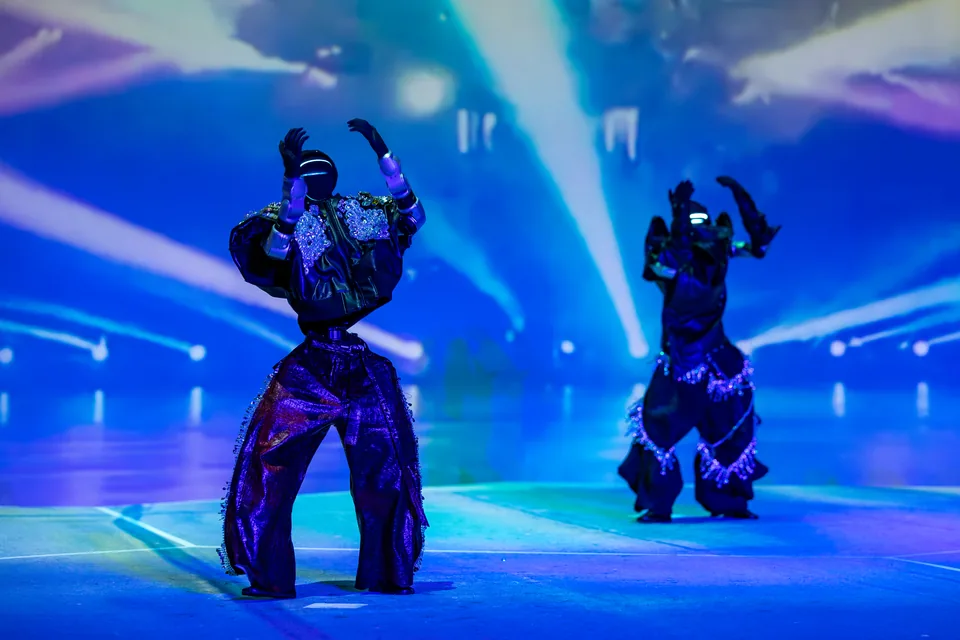
Yonhap News Agency reported from the opening itself, covering K-pop group choreography performed by robots and a joint stage shared with human dancers. The same report also took in the participatory side of the park, where visitors control robots directly and interact with them.
For reference, Galaxy Robot Park’s official opening date is 21 August 2026, and 17 new robot types joined the line-up at the opening. Cumulative attendance during the pre-opening period, before the official opening, was 20,000. These figures are facts confirmed by the company and are recorded here separately from what Yonhap reported.
A variety of robots from the start
In its pre-opening report of 3 July 2026, Newsis introduced Galaxy Robot Park in the Godeok-dong area of Gangdong-gu, Seoul. Beyond the K-pop robot performances and robot boxing show in the Robot Arena, the article presented hugging robots, robot dogs and drawing robots, together with an interactive experience zone.
According to the article, the pre-opening period would run for two months, with the official grand opening scheduled for September, and from September the park planned to run at least four performances a day and more than 1,000 a year. That opening date was the plan as reported at the time; the official opening actually took place on 21 August, so the July report should be read separately from the later opening coverage.
Quoting chief executive Choi Yong-ho, Newsis reported that the company presents the venue as the world’s first physical AI theme park where people and robots perform together. The article also summarised expansion plans for the Middle East, the United States and Asia, the first announcement on 4 May and the ‘MACH 33’ fashion show held on 28 May.
An expanded opening lineup
Reporting on the day of the grand opening, 21 August 2026, Asia Economy Daily said cumulative pre-opening attendance had reached 20,000 and that every advance-booking session had sold out. It noted that 17 robot types were newly added for the opening: hugging, drawing, portrait and ice-cream-making robots, plus a new programme in which visitors operate robots themselves.
Asia Today’s photo coverage recorded the grand opening and press conference held in Gangdong-gu the same day. It showed a robot drawing portraits, a robot making ice cream and a robot playing the piano, and reported that the Robot Arena stages large-scale group choreography combining K-pop with robotics.
According to Asia Economy Daily, the company described the 20,000 pre-opening visitors as evidence that robots can become a new form of entertainment, and said it plans to expand to Dubai, Japan and the United States once the domestic model has been proven. The newly opened restaurant, bakery, café and ice-cream shop were reported alongside.
Physical AI as an everyday experience
In its 21 August report, Digital Chosun summarised the roughly 5,000-pyeong park as home to boxing, hugging, drawing, portrait, ice-cream-making, piano-playing, visitor-remote-controlled and K-pop choreography robots, and covered the food and beverage facilities — restaurant, bakery, café and ice-cream shop — in the same piece.
A broadcast report from Seoul Economic TV on 24 August confirmed the 5,000-pyeong (about 16,500 m²) scale and the 17 new robot types, and introduced ‘Stella’, a robot presented performing K-pop dance and taekwondo moves. According to that report, the company’s revenue in the previous year was 298.8 billion won and its valuation has passed 1 trillion won; Choi Yong-ho said he plans to open a second park in Dubai within the year.
Read through the three strands of performance, interaction and everyday service, these reports give a clear picture of how the park is put together.
How visitors participate
ZDNet Korea covered the official opening and vision ceremony held on 15 May 2026 at the Robot Arena of Galaxy Robot Park in Gangdong-gu, Seoul. Humanoid robots performed six songs, including tracks by G-Dragon and Taemin, and the event also featured robot boxing, robot portraits and a demonstration of a mirroring system in which a robot is controlled by following a person’s movements.
The plan reported at the time was to start with three performances a day, expand to a maximum of six, and aim for more than 1,000 K-pop robot performances a year. After the official opening the target was restated as at least four a day and more than 1,000 a year, so any performance count needs to be read together with the date of the report.
According to ZDNet Korea, the company described itself as a ‘physical AI-based entertech company’, and Choi Yong-ho presented the robot park as the first place where people can experience a future in which humans and robots live together.
How to compare Korean reports
On-site reporting, photo coverage and articles relaying company announcements each have different strengths. Scenes of audience participation, such as the mirroring demonstration at the 15 May vision ceremony, are described concretely in on-site reports, while figures such as the 17 new robot types or the 20,000 cumulative visitors come from articles relaying the company’s 21 August announcement. When the same number appears across several outlets but traces back to a single announcement, it is not counted as an independent tally.
Set side by side, the reports are more useful for explaining how roles divide — performance, direct control, portraits, food and music — than for simply noting that robots are present. Information that changed with time, such as the September opening expected in July reports and the actual opening on 21 August, is linked in chronological order. The grouping in this article is editorial commentary and is distinct from any assessment of an individual robot’s sensors, AI model or level of autonomy.
Frequently asked questions
When did Galaxy Robot Park officially open?
Galaxy Robot Park officially opened on 21 August 2026. According to Korean coverage, cumulative pre-opening attendance before the official opening was 20,000, and 17 new robot types joined the line-up for the opening.
Where is Galaxy Robot Park and how big is it?
Galaxy Robot Park is in the Godeok area of Gangdong-gu, Seoul, on a site of roughly 16,500 m² (about 5,000 pyeong). It is operated by Galaxy Corporation. Check the park’s official channels for the latest visitor information.
Which robots were added when Galaxy Robot Park officially opened?
Seventeen new robot types were added for the official opening. Reports from Asia Economy Daily, Asia Today and Digital Chosun described portrait robots, ice-cream-making robots, piano-playing robots and a programme in which visitors control robots themselves.
Why did July reports say Galaxy Robot Park would open in September when the actual date was different?
The ‘September official opening’ in pre-opening reports from Newsis and others on 3 July 2026 was the plan at the time of reporting. The official opening actually took place on 21 August 2026; the two dates simply reflect the difference in when the reports were published.