8,000 preview reservations — what the sellout figures mean
July 2026 coverage reported sold-out July weekend shows and approximately 8,000 reservations at Galaxy Robot Park. These are historical preview booking figures, not annual attendance or current ticket availability.
Key takeawayThe Korea Herald (7 July 2026) and The Korea Times (8 July) reported that about 8,000 people had booked during Galaxy Robot Park’s initial July reservation window and every July weekend show had sold out. The articles carried the then-planned September opening and a target of at least four shows a day, over 1,000 a year; the official opening was 21 August. The 20,000 cumulative visitors is a separate measure.
What sold out?
The Korea Times and The Korea Herald relayed, on the basis of a company announcement, that the July weekend shows in the pre-opening period had sold out. The Korea Herald on 7 July 2026 and The Korea Times on 8 July reported that about 8,000 people had secured bookings during the initial July reservation window and that every July weekend show was sold out. The claim concerns a defined set of sessions in a specific period; it cannot be stretched to mean that every later weekday session or tickets for other months also sold out.
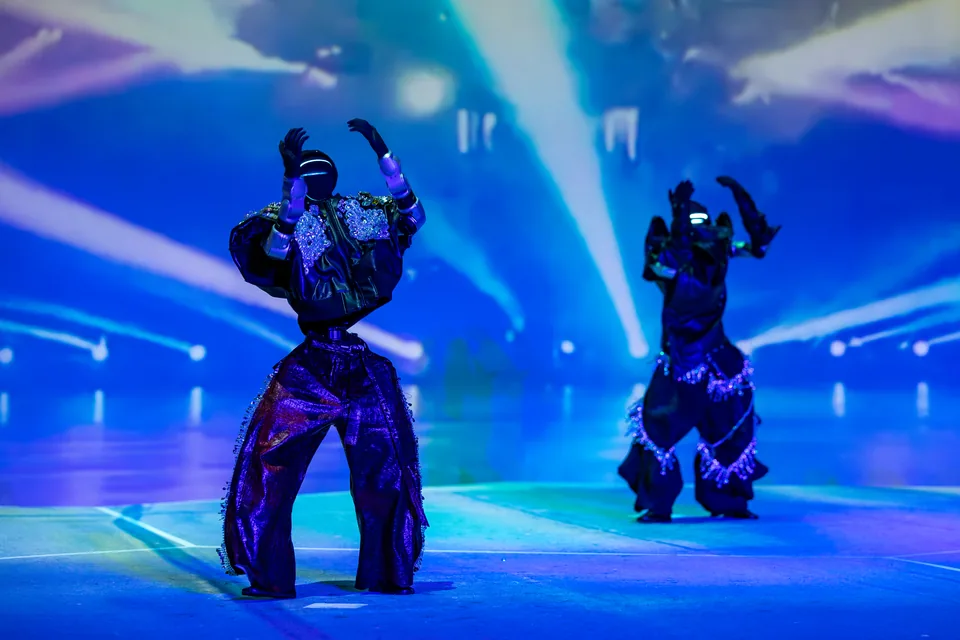
Both articles identified the stage as the Robot Arena in Godeok-dong, Seoul, and listed K-pop choreography robots, robot boxing performers, a hugging robot, a robot dog and a portrait robot as part of the line-up. They also recapped the ‘MACH 33’ robot fashion show of May 2026.
According to The Korea Times, Choi Yong-ho said the company would start in Seoul and extend the model to major cities worldwide, and the company set out plans to enter Dubai, the United States, Japan and Southeast Asia. These should be read as plans attributed to the company.
Reservations versus admissions
A reservation is an indicator of intent to attend and may differ from actual admissions. The 8,000 reported by The Korea Times is the number of people who booked during the initial July reservation window. The 20,000 in Asia Economy Daily’s opening report of 21 August 2026 is cumulative pre-opening attendance up to the official opening, and the same article reported that every advance-booking session had sold out.
Before comparing the two figures, the counting periods and the treatment of cancellations and repeat visits need to be established. The two are not added together and presented as total demand. The accurate approach is to quote the early-July booking record and the cumulative figure at the August opening each with its own date attached.
How should operating targets be read?
The reporting at the time presented at least four performances a day and more than 1,000 a year as the company’s operating target. In The Korea Times article these figures were given as the plan for after the official opening, and the company’s own fact sheet likewise records a target of at least four performances a day and more than 1,000 a year on a permanent basis once the park had officially opened.
A target number of sessions is not the same as sessions completed. Sell-out reports show early interest, but they do not supply the data needed to calculate utilisation, spend per visitor or profitability. When quoting the target, keep the wording ‘the company aims to’, and confirm operating results through later material with defined periods.
In The Korea Times article this performance target appeared alongside the company’s plan to extend the same model to major cities worldwide. Whether the permanent shows in Seoul run as planned is therefore also a benchmark when reading the expansion plans.
Why does an earlier article mention September?
The July articles refer to the September official opening that was expected at the time. Both the headline and the body of The Korea Times piece of 8 July gave September as the official opening, which was the company’s plan when the article was published. The official opening actually took place on 21 August 2026, so the piece has to be read in chronological order with the later opening coverage.
In short, the public event in May 2026, the pre-opening bookings in July and the official opening on 21 August are different stages. The 8,000 reservations and the weekend sell-outs in the July article are records from the pre-opening stage, and the fact that the opening date was brought forward does not change what those booking figures mean. Not repeating an early article’s planned date as though it were a current fact is what it takes to cite the reporting record accurately.
Frequently asked questions
How many people booked for Galaxy Robot Park’s pre-opening?
According to July 2026 reports from The Korea Herald and The Korea Times, about 8,000 people booked during Galaxy Robot Park’s initial July reservation window. That is the pre-opening booking record at the time, not current ticket availability.
What sold out at Galaxy Robot Park’s pre-opening?
According to July 2026 reports, every July weekend show in Galaxy Robot Park’s pre-opening period sold out. Opening coverage on 21 August later reported that every advance-booking session had sold out as well.
What is the difference between 8,000 pre-opening reservations and 20,000 cumulative visitors?
About 8,000 is the number of people who booked during the initial reservation window in July 2026; 20,000 is cumulative pre-opening attendance up to the official opening on 21 August. They cover different periods and measure different things, so they are not added together.
Why does the September opening in July articles differ from the actual opening date?
The September official opening in July 2026 articles from The Korea Times and others was the company’s plan at the time of reporting. Galaxy Robot Park’s official opening actually took place on 21 August 2026; the two dates simply reflect when each report was published.